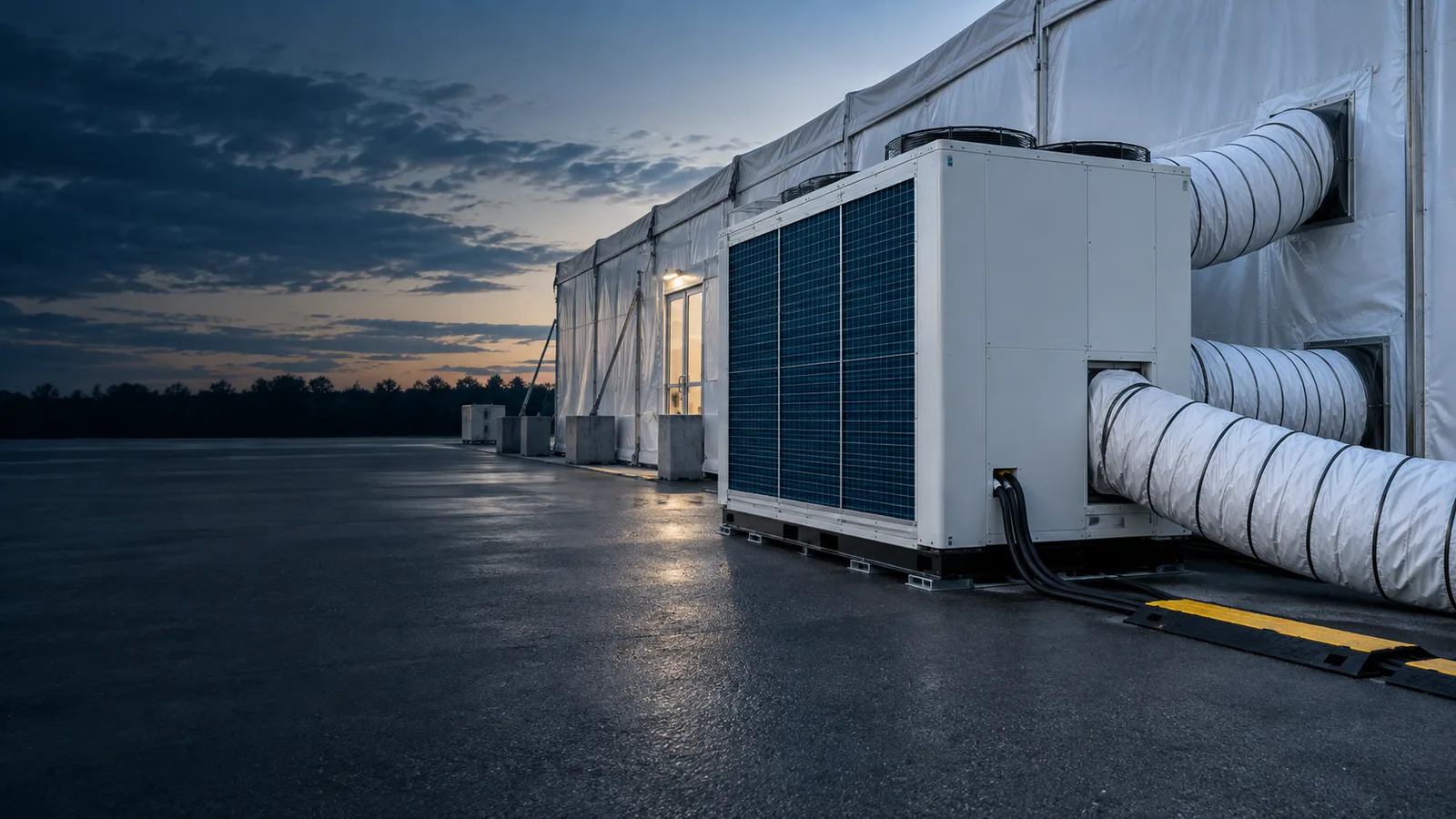
Who calls in a cooling emergency
The caller is usually a facility or property manager whose HVAC failed, an IT or data-room manager watching temperatures climb, an event organizer facing a heat wave, or an HVAC contractor who needs temporary cooling while they repair or replace equipment. All of them want a fast, competent answer and a delivery time.
Pages that qualify the job quickly
A useful emergency cooling page helps the buyer give you what you need and shows that you understand the problem.
- Unit types and cooling capacities you carry, with typical uses.
- Power requirements and whether you supply power or distribution.
- Condensate handling, exhaust or ducting options, and placement limits.
- Typical response time within your service area.
- A short list of what to have ready when calling.
Partner with HVAC contractors
HVAC service companies regularly face customers whose system is down for days or weeks while parts arrive. Contractors who can offer temporary cooling solve their customer's problem and protect the relationship. Being their go-to rental partner produces steady referrals that are not dependent on search.
Ready the ads before peak heat
Build urgent cooling campaigns ahead of the season, restrict them to the area you can serve quickly, and raise budgets during heat waves. Watch utilization closely; when the fleet is committed, narrow or pause the campaigns and offer a waitlist.
Follow up after the emergency
Every emergency customer is a candidate for a standby agreement, seasonal planning, or a pre-reserved unit for critical spaces. A short follow-up after the job converts urgent one-time rentals into planned revenue.
Checklist
- Emergency cooling page with capacities, power, and placement details
- Live call answering with a qualification script
- Referral relationships with local HVAC service companies
- Urgent cooling campaigns built before peak heat
- Post-job follow-up offering standby or seasonal agreements